I Came Home to Find My Wife and Newborn Barely Alive. By Sunrise, the Woman Who Raised Me Was in Handcuffs—and the House She Wanted Was Never Mine to Give.
The first thing I noticed was the smell.
Not the ordinary chaos of a house with a newborn—the sour milk, dirty diapers, or laundry that had gone too long without washing.
This was different.
The air smelled stale, almost rotten, as though every window had been sealed for days. Beneath it lingered the sharp, unmistakable scent of urine and sweat.
The front door stood several inches open.
I entered slowly, still holding a paper bag of pastries from Hannah’s favorite bakery in one hand and a package of newborn diapers beneath my arm.
“Mom?”
The television was blasting from the living room.
Some daytime talk show host was laughing as if the world were perfectly normal.
My mother, Patricia Parker, lay asleep across the sofa beneath a cream-colored blanket. An empty wineglass rested on the floor beside her. My younger sister, Courtney, was curled in the armchair, her phone still clutched in one hand.
The coffee table was covered with takeout containers, dirty cups, wine bottles and crusted plates.
Neither of them looked exhausted.
They looked comfortable.
Too comfortable.
A cold sensation crawled beneath my skin.
“Hannah?” I called.
No answer.
I set the diapers and pastries down.
My shoes crunched against something on the hardwood floor. When I looked down, I saw dried baby formula scattered beneath an overturned bottle.
Then I heard Owen crying upstairs.
It was not the powerful, angry cry I remembered from the hospital.
It was thin.
Hoarse.
Exhausted.
I ran.
My suitcase slammed against the stair railing as I abandoned it halfway up. The nursery door was open, but the room was empty. Owen’s bassinet had been dragged into our bedroom.
The bedroom door was closed.
I reached for the handle.
Locked.
“Hannah?”
The crying stopped suddenly.
That frightened me more than the crying had.
I struck the door with my shoulder.
It did not move.
“Hannah!”
Behind me, footsteps shuffled across the hallway.
My mother appeared at the top of the stairs, pulling her robe closed.
“What on earth are you doing?” she demanded.
“Why is the bedroom locked?”
Her expression changed for only a fraction of a second.
Then she sighed.
“Because your wife has been behaving irrationally.”
I stared at her.
“What does that mean?”
“It means she needs to sleep. She has been creating drama since you left. Crying, complaining and refusing to listen to anyone.”
“Open the door.”
“Ethan, lower your voice.”
“Give me the key.”
Courtney appeared behind her, rubbing her eyes.
“What’s happening?”
“Where is the key?” I shouted.
My mother stiffened.
“You will not shout at me in this house.”
A weak sound came from behind the bedroom door.
“Ethan?”
It was Hannah’s voice.
May you like
The Little Girl Who Took the Mafia Heir’s Hand. The Secret Beneath Her Silver Pendant. 041
Barely louder than a breath.
I stepped closer to the door.
“Hannah, I’m here.”
There was a scraping sound from inside, as if she were trying to move across the floor.
“Please,” she whispered. “Owen needs help.”
My mother grabbed my arm.
“She is exaggerating. That child has been fed.”
I pulled away so violently that she stumbled backward.
“Open this door now.”
Courtney folded her arms.
“You’ve been gone four days, and suddenly you think you know everything? Hannah refuses to do anything. Mom has had to clean, cook and take care of the baby while your precious wife lies around feeling sorry for herself.”
I stared past her at the disaster downstairs.
“You cleaned?”
Courtney’s face tightened.
My mother stepped between us.
“Your wife has turned you against your own family before you’ve even heard our side.”
Something inside me went completely still.
I backed away from the door.
My mother must have mistaken it for surrender because her shoulders relaxed.
Then I lowered my head and charged.
The wood split near the lock.
My shoulder exploded with pain.
I struck the door again.
The frame cracked.
On the third blow, the door burst inward.
What I saw inside that room ended the person I had been before that moment.
The curtains were closed.
The air was hot and suffocating.
Hannah lay on the floor beside the bed, wearing the same pale blue maternity nightgown she had worn during our last video call.
It was stained with milk, sweat and blood.
Her dark hair was plastered to her face. Her lips were cracked. Her skin looked gray beneath the yellow glow of the bedside lamp.
Owen lay beside her on a folded towel.
Not in his bassinet.
Not beneath a proper blanket.
On a towel.
His tiny face was red, but his movements were weak. His mouth opened as though he wanted to cry, yet almost no sound emerged.
Hannah tried to lift her head when she saw me.
She could not.
“Ethan,” she whispered.
I dropped to my knees.
“Oh, God.”
Her wrists were covered with dark purple marks.
Some were circular.
Others formed straight lines across her skin.
Restraint marks.
I looked toward the bed.
A silk scarf had been tied to one of the bedposts.
Another scarf lay on the floor near Hannah’s feet.
There was an empty glass beside her, a cracked breast pump and a plastic plate containing half a piece of dry toast.
The water pitcher on the nightstand was empty.
I reached for Owen.
His body felt too warm.
Yet his hands were cold.
“Hannah, when did he last eat?”
Her eyes struggled to focus.
“I don’t know.”
“What do you mean?”
“They wouldn’t… let me…”
My mother entered the room.
“Stop being ridiculous,” she snapped. “I fed him this morning.”
Hannah flinched at the sound of her voice.
That tiny movement told me everything my mother’s explanations never could.
I pulled my phone from my pocket.
“What are you doing?” Patricia demanded.
“Calling an ambulance.”
“That is completely unnecessary.”
Hannah’s hand closed weakly around my sleeve.
“Don’t leave me.”
“I’m not leaving.”
My mother moved toward me.
“Ethan, hang up. Think about how this will look. People will misunderstand. Your wife has postpartum depression. She tied those scarves herself.”
I stared at her.
“Then why was the door locked from the outside?”
Silence.
Courtney appeared in the doorway.
Her face had gone pale.
“It wasn’t exactly locked from the outside,” she said. “We were protecting the baby.”
“From whom?”
Neither answered.
The emergency dispatcher picked up.
I gave our address, described Hannah’s condition and told them my newborn son appeared dehydrated.
My mother tried to snatch the phone.
I caught her wrist.
“Touch me again,” I said quietly, “and I will tell the police you attempted to interfere with an emergency call.”
Her mouth fell open.
For the first time in my life, Patricia Parker looked at me and realized I was no longer afraid of disappointing her.
The ambulance arrived within eight minutes.
It felt like eight hours.
Two paramedics rushed upstairs while I carried Owen and tried not to shake. Hannah cried out when they moved her onto the stretcher. One of the paramedics glanced at the bruises on her wrists and then at my mother.
“Who restrained her?”
“No one restrained anyone,” Patricia said immediately.
The paramedic ignored her.
“Hannah, can you tell me what happened?”
Hannah turned her face toward me.
Her expression held fear, shame and something worse.
Uncertainty.
As though she did not know whether I would protect her or betray her again.
“I fell,” she whispered.
My mother exhaled in relief.
The paramedic frowned.
“You fell on both wrists?”
Hannah closed her eyes.
I knelt beside the stretcher.
“Hannah, you don’t have to protect anyone.”
Her eyes opened again.
Tears slipped toward her temples.
“I’m not protecting them,” she whispered. “I’m protecting Owen.”
Before I could ask what she meant, her body jerked.
A tremor moved through her arms.
Then her eyes rolled back.
“Hannah!”
The paramedic pushed me away as the second medic reached for oxygen.
“She’s seizing. We need to move.”
Everything became noise.
Commands.
Metal wheels slamming across the doorway.
Owen crying against my chest.
Courtney asking whether they were really taking Hannah to the hospital.
My mother repeating that this was an overreaction.
As the paramedics carried my wife downstairs, one of them turned toward me.
“Is there anyone else who can ride with the baby?”
“No.”
“Then bring him. We may need to assess him too.”
My mother followed me onto the porch.
“Ethan, you cannot take that child away without consulting us.”
I stopped.
The words were so absurd that I almost laughed.
“Consulting you?”
“I am his grandmother.”
“You left him lying on a towel beside an unconscious woman.”
“She insisted on keeping him in that room.”
“Because you locked her inside it.”
Patricia lowered her voice.
“Do not say things you can’t take back.”
I looked at the woman who had raised me, bandaged my scraped knees, attended every school performance and taught me that family loyalty mattered above everything else.
Then I looked through the open front door at the wreckage of my home.
“I should have said them years ago.”
I climbed into the ambulance.
The doors closed between us.
Owen was admitted immediately.
His blood sugar was dangerously low. He had lost more weight than expected after birth and showed clear signs of dehydration.
Hannah was taken behind another set of doors.
No one would tell me anything except that she had a fever, abnormal bleeding and unstable blood pressure.
I sat in the pediatric emergency department holding my son while a nurse inserted a tiny IV into his hand.
He barely reacted.
That frightened me.
Newborn babies were supposed to scream when needles touched them.
Owen only whimpered.
“I’m sorry,” I whispered. “I’m so sorry.”
The nurse glanced at me.
“Did you know he wasn’t feeding properly?”
“I was out of town.”
Her expression remained professional, but I heard the question beneath her silence.
Why had I left?
I did not have an answer that did not sound pathetic.
Work had called.
My mother had volunteered.
Hannah had told me she needed me.
And I had gone anyway.
I had watched the fear in my wife’s eyes and decided my mother’s confidence was more convenient to believe.
A doctor entered twenty minutes later.
She was a woman in her late forties with silver beginning to appear at her temples. Her badge identified her as Dr. Miriam Cole.
“Mr. Parker?”
I stood so quickly that Owen’s monitor wire pulled tight.
“Yes.”
“Your son is responding to fluids and glucose. We will continue monitoring him, but I’m cautiously optimistic.”
My knees weakened.
“And my wife?”
Dr. Cole’s expression changed.
“Hannah has a severe uterine infection. She is also significantly dehydrated and anemic. We believe she may have experienced a postpartum hemorrhage that was not treated.”
“I don’t understand. She was discharged from the hospital.”
“A secondary hemorrhage can occur several days after delivery. It requires urgent treatment.”
“Is she going to be okay?”
“She’s receiving antibiotics, fluids and blood products. Her condition is serious, but she arrived in time.”
In time.
The words cut through me.
Had I come home the next morning, it might not have been in time.
Dr. Cole pulled a chair closer.
“There is something else we need to discuss.”
I looked at Owen.
“What?”
“Your wife has bruising around both wrists and one ankle. The patterns are consistent with restraints.”
I swallowed.
“I saw the scarves.”
“She also has abrasions along her forearms and bruising on her upper arms. Some appear several days old.”
“My mother said Hannah did it to herself.”
“Is that what you believe?”
“No.”
The answer came without hesitation.
Dr. Cole studied me.
“Hannah’s initial toxicology screen was positive for a sedative called clonazepam.”
I stared at her.
“Hannah doesn’t take clonazepam.”
“You’re certain?”
“Yes. She was prescribed ibuprofen and an antibiotic after delivery. That’s all.”
“Was she breastfeeding?”
“Yes.”
Dr. Cole’s mouth tightened.
“Clonazepam can cause drowsiness and weakness. It may also pass into breast milk. We need to determine how she received it.”
My stomach turned.
“My mother takes something for anxiety.”
“Do you know the name?”
“No.”
“Can you find out?”
I pulled out my phone.
There were more than thirty missed calls.
Most were from my mother.
Several were from Courtney.
One voicemail had been left only six minutes earlier.
I played it on speaker.
“Ethan, this has gone far enough,” Patricia’s voice said. “Doctors love inventing emergencies because it protects them from lawsuits. Hannah has always been dramatic. Bring Owen home before she fills your head with lies.”
Dr. Cole listened without reacting.
Then she said, “Mr. Parker, I am required to report suspected domestic violence and child neglect.”
I looked at her.
“You mean to the police?”
“Yes.”
“My mother will say I’m attacking her.”
Dr. Cole leaned forward.
“Your wife arrived with ligature marks, an untreated infection, sedatives in her blood and a newborn showing signs of dehydration. This is not a disagreement between relatives.”
A sharp, humiliating sob rose in my chest.
I covered my face with one hand.
“I left them there.”
Dr. Cole’s voice softened.
“You need to focus on what you do next.”
“What happens now?”
“A forensic nurse will document Hannah’s injuries when she is stable. Law enforcement will want to speak with you. Child protective services may also become involved because of Owen’s condition.”
The possibility of losing my son struck me like a physical blow.
“Are they going to take him?”
“I can’t answer that. But cooperation matters. Honesty matters. So does creating a safe environment.”
I looked down at Owen’s tiny face.
“I won’t take him back to that house while my mother is there.”
“Good.”
The word was simple.
Firm.
It was the first correct decision anyone had credited me with making that day.
Two officers arrived less than an hour later.
Detective Lena Brooks was the first to introduce herself. She was tall, calm and direct, with dark hair pulled into a low knot.
Her partner, Officer Ruiz, remained near the door and took notes.
Detective Brooks asked me to begin with the day Owen was born.
I told her everything.
The tension between Hannah and Patricia.
The argument over the house.
The business emergency.
Hannah begging me to come home.
My mother answering every phone call.
The locked bedroom.
The restraints.
The detective did not interrupt until I mentioned the property documents.
“What house did your mother want you to purchase?”
“Her current house is heavily mortgaged. She wanted me to liquidate most of my savings and purchase a larger property in Leawood.”
“In whose name?”
“Hers.”
“Why?”
“She said it should remain in the family.”
“Would your wife have needed to sign anything?”
I hesitated.
“Possibly.”
“What kind of documents?”
“I don’t know.”
The truth embarrassed me.
I managed operations for six distribution facilities, negotiated contracts worth millions of dollars and tracked every shipment entering our system.
Yet when it came to my own family finances, I had allowed my mother to speak as if she understood everything better than I did.
Hannah had repeatedly asked me to meet with an independent financial adviser.
I kept postponing it.
Detective Brooks closed her notebook.
“Do you give officers permission to enter and search your residence?”
“Yes.”
“Are you the sole owner?”
“No. Hannah and I own it jointly.”
“Then we will need either a warrant or her consent as well. Given the circumstances, I expect we can secure a warrant.”
“My mother and sister are still there.”
“Officer Ruiz has already contacted patrol units.”
I stood.
“Are you arresting them?”
“That depends on what we find and what your wife tells us.”
My wife.
The person I should have trusted first.
The person now lying unconscious because I had trusted everyone except her.
Hannah regained consciousness shortly before midnight.
Dr. Cole allowed me into the room for only a few minutes.
She looked smaller beneath the hospital blankets.
An IV ran into each arm. Oxygen rested beneath her nose. The bruises around her wrists had darkened beneath the fluorescent lights.
I stopped several feet from the bed.
She watched me without speaking.
“Hi,” I whispered.
Her mouth trembled.
“Where’s Owen?”
“He’s here. He’s getting fluids, but the doctor says he’s responding.”
“Is he safe?”
“Yes.”
“Are they here?”
I knew exactly who she meant.
“No.”
Her shoulders lowered slightly.
I stepped closer.
“Hannah, the police are investigating.”
Fear flashed across her face.
“No.”
“The doctor had to call them.”
“No, Ethan. You don’t understand.”
“Then help me understand.”
She looked toward the door.
I lowered my voice.
“My mother cannot come into this room. Security knows her name. Courtney’s name too.”
Hannah stared at me for several seconds.
“You believe me?”
The question broke something inside me.
“I believe you.”
“You didn’t before.”
“I know.”
“When I said I didn’t want her in the delivery room, you said I was making everything difficult.”
“I know.”
“When I said she was trying to control our money, you told me she was only concerned about us.”
“I know.”
“When I begged you not to leave—”
Her voice fractured.
I closed my eyes.
“I know.”
“No, you don’t.”
The words were barely audible, but they carried more force than a scream.
“You came home and saw the bruises. That’s why you believe me now. You needed proof written on my skin.”
I had no defense.
She turned her face away.
I remained beside the bed, unable to touch her.
After a long silence, Hannah spoke again.
“The first night after you left, Owen wouldn’t latch. I was in pain and terrified. Your mother said I was starving him because I wanted attention.”
My hands curled into fists.
“She took him downstairs. She said she would give him formula so I could sleep. When I woke up, the bedroom door was locked.”
“From outside?”
“Yes.”
“How long?”
“I don’t know. There was no clock. She had taken my phone.”
“Did she give Owen formula?”
“Sometimes.”
I forced myself to remain calm.
“What happened next?”
“She said I had to prove I was stable enough to be his mother.”
“Prove it how?”
“By following rules.”
Hannah swallowed painfully.
“I had to ask permission to hold him. I had to clean the kitchen before she would bring him upstairs. Courtney made videos whenever I cried.”
“Why?”
“They wanted me to look unstable.”
My skin turned cold.
“For what?”
“She said if I didn’t cooperate, she would show the videos to a judge and help you get full custody.”
“I would never—”
“You left me with her.”
The words stopped me.
Hannah looked directly at me.
“She told me you had already agreed.”
I shook my head.
“No.”
“She said the business trip wasn’t real. She said you left because you were tired of me and wanted her to collect evidence.”
“Hannah, that isn’t true.”
“I know that now.”
“But you believed her?”
“I had just given birth. I was bleeding. I had barely slept. She took my phone. Every time you called, she stood beside me.”
I remembered Hannah’s faint voice.
Ethan… please come home.
My mother laughing as she took the phone.
New mothers are emotional.
“What about your wrists?”
Hannah began trembling.
I stepped toward her, then stopped when she recoiled.
“She tied me to the bed.”
My breath caught.
“Why?”
“Because I tried to take Owen and leave.”
“Did she hurt him?”
“No. Not directly. But she kept him from me. She said hunger would teach him not to depend on a weak mother.”
I turned away, pressing both hands against the wall.
My vision blurred.
Hannah continued.
“Courtney helped her. She held my arms while your mother tied the scarves.”
“Why didn’t the scarves cut deeper?”
“They used plastic ties first.”
“Where are they?”
“Your mother put them in the kitchen trash.”
The forensic nurse entered quietly. Detective Brooks followed.
Hannah tensed.
Dr. Cole appeared behind them.
“You’re in control of this interview,” she told Hannah. “You can stop at any time.”
Hannah looked at me.
“I don’t want him here.”
The sentence hurt.
It was supposed to.
I nodded.
“I’ll go.”
As I reached the doorway, Hannah spoke again.
“Ethan?”
I turned.
“Don’t let Patricia take Owen.”
“She won’t.”
“You’ve promised me things before.”
I held her gaze.
“Then don’t trust the promise. Watch what I do.”
Patricia and Courtney were still inside my house when the police arrived.
According to Detective Brooks, my mother refused to leave because she claimed to be Owen’s temporary guardian.
She presented officers with a printed document bearing Hannah’s signature.
The document authorized Patricia to make emergency medical and custodial decisions for Owen for six months.
Hannah had no memory of signing it.
The signature looked like hers.
The witnesses listed were Patricia and Courtney.
The document was not notarized, but my mother had apparently believed it would intimidate me, the hospital or anyone else who challenged her.
Police obtained a warrant before dawn.
They recovered plastic restraints from beneath coffee grounds in the kitchen trash.
They found three clonazepam tablets crushed inside a ceramic mortar in the pantry.
They also found Hannah’s missing phone hidden inside Patricia’s suitcase.
Several unsent messages remained in the drafts folder.
One read:
Ethan, she is drugging me. Please believe me this time.
Another said:
If something happens to me, don’t let her raise Owen.
The final draft contained only four words.
I can’t stay awake.
Police arrested Patricia at 4:17 in the morning.
She was charged initially with unlawful imprisonment, aggravated domestic battery, administering a controlled substance without consent, child endangerment and obstruction.
Courtney was arrested as an accomplice.
I watched from a hospital window as a patrol car carried my mother away.
I expected to feel satisfaction.
Instead, I felt empty.
Because handcuffs could not erase the fact that I had placed Hannah within Patricia’s reach.
My phone rang continuously.
Relatives.
Family friends.
People from my mother’s church.
Aunts I had not spoken to in years.
One message said:
How could you humiliate your own mother after everything she sacrificed for you?
Another said:
Hannah has always wanted to separate you from your family.
A third warned me that accusing Patricia publicly would destroy her reputation.
Not one message asked whether Hannah or Owen had survived.
I turned off my phone.
At six in the morning, a child protection investigator named Denise Ward arrived.
She asked where Owen would live after discharge.
“I’ll take him somewhere safe,” I said.
“Where?”
“A hotel, if necessary.”
“Will your wife be with you?”
“When she’s released.”
“Does your mother have access to your home?”
“Yes.”
“Does your sister?”
“Yes.”
“Are there firearms in the residence?”
“No.”
“Have you changed the locks?”
“Not yet.”
Denise wrote something on her clipboard.
“Mr. Parker, I need you to understand that removing the alleged offenders is not the same as establishing safety.”
“I understand.”
“Do you?”
Her tone was not cruel.
That made it worse.
“You left a medically vulnerable postpartum woman and a newborn infant with someone your wife had repeatedly described as hostile and controlling.”
I lowered my head.
“Yes.”
“Did your wife ask you not to leave?”
“Yes.”
“Why did you go?”
“My employer had an emergency.”
“Was anyone else qualified to handle it?”
I thought of my deputy manager, Luke Simmons, who had offered to cover the trip.
I had refused because I wanted to prove to the regional director that becoming a father would not make me less dependable.
“Yes,” I admitted.
Denise’s pen stopped.
“Then why did you go?”
Because I had spent my life believing that disappointing my employer or my mother was dangerous, while disappointing my wife was temporary.
Because Hannah forgave me.
Because she loved me.
Because I had mistaken her love for permission to fail her.
“I made the wrong choice.”
Denise met my eyes.
“That answer is honest. It is not sufficient.”
“I know.”
“We will create a temporary safety plan. Your wife will determine whether she wants you included in it.”
“My wife?”
“Yes. She is the victim. Not you.”
The words landed hard.
I nodded.
“What do I need to do?”
“Start by respecting her decisions, even when they hurt you.”
Hannah remained hospitalized for six days.
Owen was discharged on the third day, but he did not leave with me.
Hannah asked Denise to place him temporarily with her older sister, Rebecca, who lived forty minutes away.
I wanted to object.
I did not.
Rebecca arrived with a car seat, a diaper bag and an expression that told me she had been waiting years for proof that I was not good enough for her sister.
She did not yell.
She did not insult me.
She simply took Owen from the nurse and said, “Hannah asked me to keep him safe.”
“I know.”
“You can visit when Denise approves it.”
“He’s my son.”
“And Hannah is your wife.”
I looked away.
Rebecca’s voice softened only slightly.
“She called me twice during her pregnancy and asked whether she could stay with me.”
I stared at her.
“What?”
“She never came because she kept hoping you would choose her without forcing her to leave first.”
“Why didn’t you tell me?”
“She begged me not to. She said you would accuse her of turning the family against you.”
I could not deny it.
That was exactly what I would have said.
Rebecca secured Owen’s car seat.
Before closing the door, she turned back.
“Patricia may have tied the scarves, Ethan. But you taught Hannah that calling for help would cost her marriage.”
Then she drove away with my son.
I sat alone in the hospital parking lot for nearly an hour.
My company called that afternoon.
The regional director, Mr. Caldwell, expressed concern, sympathy and vague anxiety about publicity.
“Take the week,” he said. “After that, we’ll reassess.”
“I’m taking family leave.”
There was a pause.
“Ethan, we have facilities depending on you.”
“My wife almost died while I was handling a crisis that another manager could have handled.”
“This is an emotional time.”
“Yes.”
“You should avoid making sudden professional decisions.”
“I’m not resigning. I’m using the leave I’m legally entitled to.”
Another pause.
“You’ve always been committed to the company.”
That sentence used to make me proud.
Now it sounded like an accusation.
“I was committed to the wrong things.”
I ended the call.
Then I drove home.
Crime-scene tape remained across the bedroom doorway.
The police had removed the restraints and medications, but everything else was untouched.
Hannah’s blood stained the nightgown on the floor.
Owen’s towel lay beside it.
The sight made my stomach turn.
I packed Patricia’s belongings into black trash bags.
I placed Courtney’s things beside them.
Then I called a locksmith.
While he changed the locks, I searched every room for documents.
The papers Detective Brooks had mentioned were inside a leather folder beneath my mother’s suitcase.
There were loan applications.
Property listings.
Bank statements.
A draft purchase agreement for a six-bedroom house in Leawood valued at $1.4 million.
The proposed buyers were listed as Ethan Parker and Patricia Parker.
Hannah’s name did not appear.
The down payment was $420,000.
Almost exactly the amount contained in the investment account Hannah and I had built together.
The account included my savings, but it also included $180,000 Hannah had inherited from her father.
Without her authorization, the money could not be withdrawn.
Beneath the purchase agreement was a spousal consent form.
Hannah’s signature appeared at the bottom.
It looked wrong.
Not dramatically wrong.
Just slightly too careful.
I photographed everything.
At the back of the folder was another document.
A petition for emergency guardianship of Owen Parker.
It described Hannah as unstable, delusional and incapable of caring for her child.
Supporting evidence would include videos recorded by Courtney Parker.
My name appeared as the petitioning parent.
My signature had been forged too.
I sat on the bedroom floor and stared at it.
My mother had not merely wanted Hannah’s money.
She had intended to use me to take our son.
Whether I agreed or not.
Detective Brooks returned my call within minutes.
“Do not touch anything else,” she said. “We’re sending someone.”
“I already moved the folder.”
“That’s all right. Put it down and step away.”
“Detective, there’s a guardianship petition.”
“We’ll examine it.”
“She forged my signature.”
“We’ll examine that too.”
“She planned this.”
“I know you want answers, Mr. Parker. But right now I need you to preserve evidence.”
I looked around the room.
“There may be more.”
“There usually is.”
Hannah refused to see me for the first two days after she woke fully.
On the third day, she agreed to ten minutes with a hospital social worker present.
I carried no flowers.
No apology card.
No promises.
Anything beautiful would have looked like an attempt to decorate something unforgivable.
She sat upright against the pillows, pale but alert.
The swelling around her eyes had lessened.
Her wrists were wrapped in soft bandages.
“I found the documents,” I said.
“What documents?”
“The house purchase. The guardianship petition. Forged signatures.”
Hannah’s expression did not change.
“She made me sign something.”
“When?”
“The second night.”
“What did she say it was?”
“A form allowing her to buy formula for Owen.”
I shut my eyes.
“She put pills in the water first. I remember the pen slipping out of my hand. Courtney held the paper.”
“The signature may be yours.”
“Probably.”
“She forged mine.”
Hannah looked toward the window.
“What happens now?”
“The police have the documents.”
“That wasn’t what I meant.”
I waited.
“What happens to us?” she asked.
I could have told her I loved her.
I could have said we would survive.
I could have promised to spend the rest of my life making everything right.
All of it would have centered what I wanted.
“I don’t know,” I said.
She looked at me again.
It was the first answer she seemed to trust.
“I can’t go back to that house,” she said.
“You don’t have to.”
“Even if Patricia is gone.”
“I understand.”
“No, you don’t. Every room reminds me of something she said. She chose the nursery curtains. She criticized the crib. She rearranged my kitchen every time she visited.”
“We can sell it.”
“It’s not about selling.”
“I know.”
“Do you?”
I forced myself not to respond defensively.
“I’m trying to.”
Hannah’s eyes filled with tears.
“She kept saying you would choose her.”
“I chose her every time I dismissed you.”
“Yes.”
“I know that now.”
“She told me a man only truly loves one woman. His mother or his wife.”
“That isn’t love.”
“She believed it.”
“So did I, in a different way.”
The social worker shifted quietly in her chair.
Hannah looked at my hands.
“Do you remember the night I asked you to change the beneficiary on your life insurance?”
“Yes.”
“You told your mother.”
“Yes.”
“She called me a grave robber.”
“I should have stopped her.”
“You laughed.”
The memory returned with perfect clarity.
Patricia had said, “The baby isn’t even here and she’s already planning your funeral.”
I had laughed because confronting my mother felt uncomfortable.
Hannah had left the dinner table.
I later told her she needed to develop a sense of humor.
“I’m sorry,” I whispered.
“I don’t need you to be sorry for one conversation.”
“I know.”
“I need to know why you made me fight for basic respect in my own marriage.”
I looked at the bandages around her wrists.
“Because my mother taught me that disagreement was betrayal. And I was too cowardly to unlearn it.”
Hannah flinched, but she continued listening.
“I thought keeping the peace made me a good husband and son,” I said. “But there was never peace. There was only you absorbing the damage so I didn’t have to feel uncomfortable.”
A tear moved down her cheek.
“I was so afraid you wouldn’t come home.”
“I almost didn’t.”
She closed her eyes.
“I know.”
Those two words contained everything that might have happened.
The infection.
The bleeding.
The sedatives.
Owen’s weakening cry.
A locked bedroom becoming a tomb.
“I don’t expect you to forgive me,” I said. “I’m going to cooperate with the police. I’m going to follow whatever safety plan you choose. I’ve scheduled an appointment with a therapist who specializes in family enmeshment and coercive control.”
Hannah opened her eyes.
“You scheduled therapy?”
“Yes.”
“Because Denise told you to?”
“No. She told me to respect your decisions. Therapy was mine.”
She studied me.
“You always said therapy was for people who wanted to blame their parents.”
“I was wrong.”
The corner of her mouth moved, but it was not a smile.
“That sentence sounds strange coming from you.”
“I’m practicing.”
The social worker told me the ten minutes were over.
I stood.
At the door, Hannah called my name.
“Ethan.”
I turned.
“Rebecca said you haven’t asked to take Owen from her.”
“You asked her to keep him.”
“He’s your son too.”
“Yes.”
“So why haven’t you fought her?”
“Because you’ve had enough people call control love.”
Hannah looked down.
I left before hope could make me careless.
Patricia was released on bond two days later.
A judge issued a temporary protective order prohibiting her from contacting Hannah or coming within five hundred feet of Owen.
She violated it within three hours.
Not directly.
She sent my aunt Diane to the hospital carrying a handwritten letter.
Hannah refused to read it.
I did.
My dearest Ethan,
I know you are confused and frightened. Hannah’s instability has created a terrible misunderstanding. Everything I did was intended to protect my grandson and preserve the future your father wanted for you.
Your wife has always resented our bond. She is using this incident to isolate you.
Please remember who held you when you were sick, who worked two jobs after your father died and who sacrificed everything so you could succeed.
A mother’s love may seem harsh, but one day you will understand.
Come home before it is too late.
Mom
Beneath her signature she had added:
Ask yourself why Hannah never told you the truth about the money.
I read the line several times.
When I showed it to Detective Brooks, she frowned.
“What money?”
“I assume the inheritance from Hannah’s father.”
“Did your mother know the exact amount?”
“I don’t think so.”
“Did Hannah ever receive money from another source?”
“Not that I know of.”
Detective Brooks placed the letter inside an evidence sleeve.
“She wants you to become curious.”
“It’s working.”
“That’s the purpose.”
“What if there is something I don’t know?”
“There is always something spouses don’t know. That doesn’t justify torture.”
“I didn’t say it did.”
“No. But your mother knows how to place a question in your mind and let you do the rest.”
She was right.
Patricia rarely gave direct orders.
She planted doubts.
She had spent years teaching me to mistake suspicion for wisdom.
The next morning, a news van appeared across from the hospital.
A local website published an article with the headline:
GRANDMOTHER ARRESTED AFTER POSTPARTUM MOTHER’S “MENTAL HEALTH EPISODE”
The article quoted an anonymous family source who claimed Hannah had injured herself during a psychotic episode.
It mentioned my employer.
It mentioned our neighborhood.
It described Patricia as a respected church volunteer.
By noon, strangers were debating whether postpartum women were too dangerous to be trusted with newborns.
My mother’s friends posted photographs of her serving meals at a homeless shelter.
One wrote:
This woman has spent her life caring for others. The truth will come out.
Hannah saw the story before anyone could stop her.
Her blood pressure spiked.
The hospital banned phones from her room.
I contacted an attorney.
Her name was Camille Hart, a former prosecutor who specialized in domestic violence cases.
She listened without interrupting while I explained the charges, the forged documents and the media campaign.
Then she asked, “Whose lawyer am I?”
“I assumed both of us.”
“No.”
I blinked.
“Your wife needs independent representation. You may eventually become a witness, a co-plaintiff or even someone whose actions are scrutinized.”
“You think I could be charged?”
“I don’t know enough yet. But Hannah’s interests must come first. She needs an attorney who represents only her.”
“What about Owen?”
“The child protection case may involve separate counsel.”
I leaned back.
“This is more complicated than I realized.”
“Abuse is usually simple. The systems surrounding it are complicated.”
“Can you represent Hannah?”
“Only if she chooses me.”
She met Hannah at the hospital that afternoon.
Hannah hired her.
I retained another attorney, Marcus Bell, on Camille’s recommendation.
Marcus reviewed my financial records and the proposed property transaction.
“The good news,” he said, “is that the spousal consent form likely would not have survived serious scrutiny.”
“What’s the bad news?”
“Your mother had access to enough personal information to imitate both of you convincingly. Social Security numbers. Account statements. Signature samples. Tax returns.”
“She helped prepare our taxes.”
“How long?”
“Seven years.”
Marcus removed his glasses.
“Then we need to examine everything.”
We found the first irregularity in a retirement account I had forgotten existed.
Three years earlier, someone had attempted to add Patricia as a joint beneficiary.
The request was rejected because the signature did not match the one on file.
I had never received the rejection letter.
My mailing address had been temporarily changed to Patricia’s house.
Then we found a life insurance policy opened in my name.
Coverage amount: $750,000.
Primary beneficiary: Patricia Parker.
The policy had been active for eighteen months.
“I didn’t open this,” I said.
Marcus looked grim.
“Are you certain?”
“Yes.”
“The premiums came from a checking account ending in 4419.”
“That’s my mother’s account.”
“Then she insured your life and named herself beneficiary.”
“Is that legal?”
“It can be, if she had an insurable interest and your consent. The issue is whether your signature is genuine.”
It was not.
The discovery changed the investigation.
Detective Brooks requested Patricia’s financial records.
The district attorney added identity theft, forgery and attempted fraud to the potential charges.
My mother responded by releasing another statement through her attorney.
Mrs. Parker categorically denies harming her daughter-in-law or grandson. She believes the allegations arise from a tragic medical crisis combined with longstanding family conflict. Mrs. Parker looks forward to clearing her name.
Courtney said nothing.
Her silence disturbed me more.
She had always been the louder of the two.
Patricia delivered the insults with a smile.
Courtney enjoyed watching them land.
Now she refused interviews, ignored relatives and instructed her attorney to negotiate separately.
Detective Brooks believed Courtney might cooperate.
“She’s afraid of your mother,” the detective said.
“She didn’t look afraid when she helped restrain Hannah.”
“People can be victims and offenders at the same time.”
“Are you asking me to feel sorry for her?”
“No. I’m asking you not to confuse explanation with absolution.”
I looked through the glass partition into the interview room where Courtney sat beside her attorney.
“She filmed my wife crying.”
“That may be what puts your mother in prison.”
Courtney’s phone contained eighty-six videos recorded during the four days I was away.
Most had been deleted.
The digital forensics team recovered them from a cloud backup.
In the first video, Hannah sat at the kitchen table holding Owen.
She looked exhausted but coherent.
Patricia stood behind the camera.
“Tell Ethan why you refused to feed his son,” my mother instructed.
“I didn’t refuse,” Hannah said. “He won’t latch. I need the lactation consultant.”
“You canceled the appointment.”
“You took my phone.”
“Stop lying.”
The video ended.
In another recording, Hannah stood at the sink washing dishes.
Her hospital bracelet was still around her wrist.
Blood had soaked through the back of her nightgown.
Courtney laughed behind the camera.
“Mom gave birth twice and still managed to keep a clean house.”
Hannah turned.
“Please stop filming me.”
“Why? Are you ashamed?”
“I’m bleeding.”
“You’re always bleeding or crying or complaining.”
A third video showed Patricia placing tablets into a glass.
The camera focused too closely for investigators to identify the medication, but the timestamp matched the sedative levels in Hannah’s blood.
“What is that?” Courtney asked.
“Something to calm her down.”
“What if Ethan finds out?”
“He won’t.”
“How do you know?”
“Because Ethan believes me.”
My mother said it without hesitation.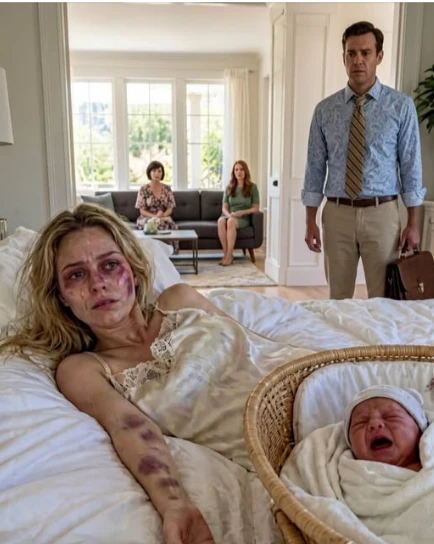
Without concern.
As if my loyalty were a weapon she owned.
The longest recording lasted eighteen minutes.
Hannah was tied to the bed.
Owen cried in the bassinet near the doorway.
Patricia stood beside him holding a stack of papers.
“Sign the consent form,” she said.
“I can’t read it.”
“You don’t need to read it.”
“Give me my baby.”
“You are in no condition to hold him.”
“You drugged me.”
“I gave you something because you were hysterical.”
“I want Ethan.”
“Ethan doesn’t want this version of you.”
Hannah began crying.
Patricia moved closer.
“Sign, and I will bring him to you.”
“Promise?”
“A mother always keeps her promises.”
Hannah signed.
Then Patricia gathered the papers and walked away.
“Please,” Hannah called. “You said I could hold him.”
My mother paused at the door.
“If caring for a baby is this hard for you, maybe you should never have become a mother.”
She turned off the light.
Owen continued crying in the darkness.
The video ended.
I watched it once.
Then I vomited in the courthouse restroom.
Marcus found me gripping the sink.
“You don’t need to watch the others.”
“Yes, I do.”
“No, you need to testify accurately. You do not need to punish yourself through repeated exposure.”
“She said I believed her.”
“You did.”
I stared at him through the mirror.
He did not soften the truth.
“Then why shouldn’t I watch?”
“Because guilt that leads to accountability is useful. Guilt that turns into self-destruction becomes another way to make the situation about you.”
I washed my face.
“What am I supposed to do with it?”
“Let it change your behavior.”
The videos destroyed Patricia’s public defense.
Her attorney claimed the footage lacked context.
The district attorney responded by releasing no footage but confirming the existence of “extensive digital evidence.”
The news coverage shifted overnight.
Church friends deleted their supportive posts.
Relatives stopped calling.
Patricia’s attorney requested a plea negotiation.
Hannah refused to support one.
“She left Owen hungry,” Hannah told Camille. “She listened to him cry and used him to control me.”
Camille nodded.
“The prosecutor makes the final decision, but your position matters.”
“I want a trial.”
I sat across the room, silent.
Hannah had been discharged and was staying with Rebecca.
She wore long sleeves despite the summer heat.
She had allowed me supervised visits with Owen, but we had not been alone together since the hospital.
At the end of the meeting, she asked everyone except me to leave.
My heart began pounding.
When the door closed, Hannah folded her hands.
“Patricia’s lawyer contacted Camille.”
“About a plea?”
“About money.”
“What money?”
“She offered to transfer her house to Owen’s trust if I asked the prosecutor for leniency.”
I almost laughed.
Even now, my mother believed property could purchase obedience.
“What did you say?”
“No.”
“Good.”
Hannah looked at me.
“You didn’t ask how much the house was worth.”
“It doesn’t matter.”
“It used to.”
“I know.”
“She says you’ll lose your inheritance if she goes to prison.”
“I don’t want it.”
“You always said that house would eventually be yours.”
“I also said she would never actually hurt you.”
Hannah’s eyes lowered.
“I don’t know how to talk to you anymore.”
“You don’t have to.”
“I’m still angry.”
“You should be.”
“Sometimes I look at Owen and think about how close we came.”
“So do I.”
“And sometimes I miss you.”
I could not breathe.
Hannah shook her head quickly.
“That doesn’t mean I’m ready to come back.”
“I know.”
“I need you not to turn every small piece of hope into a demand.”
“I won’t.”
She looked toward the door.
“I start trauma therapy tomorrow.”
“I’m glad.”
“I may decide I want a divorce.”
My chest tightened.
“All right.”
Her eyes flashed.
“That’s all you have to say?”
“What do you want me to say?”
“I don’t know.”
“I don’t want a divorce. But if I beg you to stay before you feel safe, then I’m asking you to take care of my fear again.”
Hannah stared at me.
Tears formed in her eyes.
“You’re different.”
“Not enough.”
“No,” she whispered. “Not enough yet.”
It was the closest thing to hope I had received.
I treated it carefully.
Courtney accepted a cooperation agreement three weeks later.
She pleaded guilty to unlawful restraint, child endangerment and evidence tampering.
In exchange for truthful testimony against Patricia, prosecutors agreed to recommend a reduced sentence.
I hated the deal.
Hannah supported it.
“Without her testimony, Patricia will blame everything on Courtney,” she explained.
“She deserves prison too.”
“She may still go.”
“Not long enough.”
Hannah looked at me.
“This isn’t about making your anger feel satisfied.”
The words echoed what Marcus had told me.
I nodded.
“What did Courtney give them?”
“Passwords. Financial records. Information about Patricia’s lawyer and the forged documents.”
“Anything else?”
Hannah hesitated.
“They found more videos.”
My stomach tightened.
“Of you?”
“No.”
“Then who?”
She looked toward Camille.
The attorney answered.
“Your father.”
For several seconds, I did not understand.
“My father died eleven years ago.”
“Yes,” Camille said.
“What videos?”
“Courtney recorded conversations with your mother over several years. She appears to have used some of them as leverage when Patricia threatened to cut her off financially.”
“Leverage for what?”
“Money. Housing. Cars. General support.”
“Courtney blackmailed her?”
“In effect.”
I looked at Hannah.
“What does this have to do with my father?”
Camille opened a folder.
“We need you to listen to an audio recording.”
The clip began with restaurant noise.
Glasses.
Music.
Courtney’s voice sounded younger.
“You act like Ethan’s the only one who matters.”
Patricia replied, “Ethan understands loyalty.”
“He doesn’t know anything.”
“And he doesn’t need to.”
“What if I tell him?”
“You won’t.”
“How do you know?”
“Because then you lose everything too.”
There was a pause.
Courtney lowered her voice.
“Dad didn’t want to sign the new will.”
My mother laughed softly.
“Your father didn’t want to do many things.”
“You took his pills.”
“He was confused.”
“You hid his heart medication.”
“I managed his medication because he was irresponsible.”
“He died two days later.”
A chair scraped.
Patricia’s voice became cold.
“Be very careful.”
“Did you know he would die?”
“Your father made his choices.”
“That’s not an answer.”
“It is the only answer you’re getting.”
The recording stopped.
I stared at the folder.
“No.”
No one spoke.
“My father had a heart attack.”
Camille’s expression remained neutral.
“That was the original determination.”
“He had heart disease.”
“Yes.”
“He forgot medication all the time.”
“Did he?”
I thought back.
My father, Robert Parker, had kept a plastic organizer beside the toaster.
Morning pills.
Evening pills.
He checked them obsessively.
After his death, my mother told everyone he had become careless.
She said grief and stress after losing his business had changed him.
“What new will?” I asked.
Camille slid a photocopy across the table.
The will had been signed nine days before my father’s death.
It left nearly everything to Patricia.
I remembered the reading.
I had been twenty-three.
Courtney was nineteen.
Patricia cried and said Dad trusted her to keep the family united.
I never questioned why he had left his children almost nothing directly.
“Was the signature forged?” I asked.
“It is under examination.”
My hands began shaking.
“What did the previous will say?”
Camille produced another document.
Robert Parker’s earlier will divided his estate equally between Courtney and me.
Patricia would receive the marital home and financial support through a trust.
The earlier will also contained a clause I had never seen.
Upon Ethan Parker’s marriage or the birth of his first child, his share of the trust shall be distributed directly to him.
“What trust?” I whispered.
Camille glanced at Hannah.
“Approximately $2.8 million at the time of your father’s death.”
I stared at her.
“That’s impossible.”
“Your father owned land near the freight corridor that was sold shortly before he died.”
“My mother said the business failed.”
“The operating business did. The real estate did not.”
“Where is the money?”
“We don’t know yet.”
I looked at Hannah.
Patricia’s letter returned to me.
Ask yourself why Hannah never told you the truth about the money.
“You knew?”
Hannah’s face went pale.
“Not until the hospital.”
“How?”
“Patricia told me.”
“When?”
“While I was tied to the bed.”
I stood so abruptly that my chair struck the wall.
“What did she say?”
Hannah’s eyes filled with tears.
“She said Owen’s birth activated the trust. She needed my signature to move the money before you discovered it existed.”
I could barely hear her over the pounding in my ears.
“Why didn’t you tell me?”
“I tried.”
“When?”
“The night you came home. Then at the hospital.”
“You said you didn’t know what you signed.”
“I didn’t. She mentioned a trust, but I thought she was lying to confuse me.”
“And afterward?”
“Camille told me not to discuss it until investigators verified the records.”
“You kept this from me for weeks.”
Hannah recoiled.
The reaction stopped me.
I heard myself.
The accusation.
The entitlement.
The same demand that she explain herself while recovering from what my family had done.
I sat down again.
“I’m sorry.”
No one responded.
I pressed my palms against my eyes.
“Did my mother kill my father?”
Camille answered carefully.
“Law enforcement has reopened the investigation into his death.”
“Can they prove anything after eleven years?”
“His medical records still exist. So do pharmacy logs and financial documents. His remains may be exhumed if a court authorizes it.”
I thought of the day my father died.
Patricia had called me at work.
Her voice had been calm.
Too calm.
She said she had found him in bed and that the paramedics could not revive him.
At the funeral, she stood beside the casket and accepted condolences like a queen receiving tribute.
She told Courtney and me that family must never turn against family.
Now I understood why.
It was not a value.
It was a warning.
My father’s body was exhumed in September.
Investigators could not reliably detect the absence of heart medication after so many years, but they found evidence that raised new questions.
His original autopsy had noted an unusual level of clonazepam in his system.
The finding had been dismissed because Patricia told investigators he had a prescription for anxiety.
No prescription was ever located.
The same drug had been found in Hannah’s blood.
Detective Brooks believed Patricia had sedated my father, withheld his cardiac medication and waited.
Not a dramatic murder.
No weapon.
No blood.
Just a locked bedroom, a weakened body and time.
Exactly what she had done to Hannah.
The forged will became easier to challenge when handwriting experts found significant inconsistencies.
A former employee of my father’s attorney admitted Patricia had pressured him to serve as a witness even though he had not seen Robert sign.
Bank records showed that the missing trust funds had been moved through a series of accounts controlled by Patricia.
She had spent more than half.
The Leawood house was supposed to receive the rest.
But the greatest shock came from a storage unit registered under Courtney’s name.
Inside were boxes of my father’s personal files.
Tax records.
Property deeds.
Letters.
And a sealed envelope addressed to me.
Courtney claimed Patricia had ordered her to destroy everything after my father’s death.
Instead, Courtney stored the boxes as insurance.
The envelope was opened in the presence of attorneys.
Ethan,
If you are reading this, then either I finally found the courage to tell you the truth, or I ran out of time.
Your mother has been moving money from our accounts. I confronted her three weeks ago. She said everything she did was for the family and that I had no right to threaten the future she built.
I have changed my will and placed your inheritance in a protected trust. I am also preparing to file for divorce.
I know you love your mother. I am not asking you to stop.
I am asking you to understand that love without boundaries becomes permission.
Do not make the mistakes I made.
Your wife should never have to compete with your mother for safety in her own home.
And if you have children, protect them from anyone who believes family loyalty matters more than the truth.
Dad
I read the letter three times.
The date was four days before his death.
My father had known.
He had tried to leave.
He had failed.
And eleven years later, I had placed my wife and son in the same trap.
I drove to Rebecca’s house after receiving Hannah’s permission.
She was sitting on the back porch with Owen asleep against her chest.
The leaves had begun changing.
For several minutes, I stood at the gate, unsure whether I belonged on the other side.
Hannah saw the letter in my hand.
“They found something?”
I nodded.
She let me sit beside her.
I handed her the letter.
She read slowly.
When she reached the line about a wife never competing with a mother for safety, she covered her mouth.
“I’m sorry,” she whispered.
I looked at her.
“Why are you apologizing?”
“For your father.”
I began crying before I could stop myself.
Not quietly.
Not with dignity.
Years of memories broke apart.
My father teaching me to ride a bicycle.
My mother shouting that he was holding the seat incorrectly.
My father standing silently while she criticized him.
My father taking medication each morning.
My mother saying he had become forgetful.
The casket.
The forged will.
The letter hidden for eleven years.
Hannah shifted Owen carefully and placed one hand over mine.
It was the first time she had touched me since the hospital.
“I became him,” I said.
“No.”
“I watched her diminish you and told myself it was easier not to interfere.”
“You still came home.”
“Too late.”
“But you came.”
“I almost lost both of you.”
“Yes.”
She did not soften it.
That was one of the reasons I loved her.
“Hannah, I don’t know how to repair what I did.”
“You can’t repair it alone.”
“I know.”
“And I can’t promise our marriage survives.”
“I know.”
“I need to see who you are when the crisis is over. Anyone can change for a month when they’re terrified.”
“I understand.”
“Do you?”
“I’m beginning to.”
Owen stirred between us.
His eyes opened.
For a moment, he looked directly at me.
I touched one finger to his tiny hand.
He gripped it.
Hannah watched us.
“I rented an apartment,” she said.
My heart sank, but I nodded.
“Where?”
“Near Rebecca. Two bedrooms.”
“Do you need help moving?”
“I already moved.”
“Oh.”
“The lease is for six months.”
I focused on Owen’s hand around my finger.
“What happens after six months?”
“I don’t know.”
“Can I visit?”
“Yes.”
“Supervised?”
“For now.”
“All right.”
“You’re not going to argue?”
“No.”
Hannah studied me.
“What if I said you couldn’t see him?”
“I would work through the court and the safety plan. I wouldn’t threaten you or use money.”
“That sounds rehearsed.”
“It is. Marcus made me practice.”
A tiny laugh escaped her.
It vanished quickly, but I had heard it.
For the first time since I broke down the bedroom door, hope did not feel like something I was trying to steal.
It felt like something I might earn.
Patricia’s trial began in January.
She entered the courtroom wearing navy blue and a small silver cross around her neck.
Her hair was perfectly styled.
She looked like the woman who had attended parent-teacher conferences, organized charity drives and sent handwritten thank-you notes after every dinner invitation.
She did not look at Hannah.
She looked only at me.
The prosecution presented the videos.
Jurors watched Patricia withhold Owen from his injured mother.
They saw Courtney restraining Hannah’s arms.
They heard my mother promise food, water and access to the baby in exchange for signatures.
The forensic nurse testified about the bruises.
Dr. Cole explained the infection, dehydration and sedative exposure.
The pediatric specialist described Owen’s condition.
Detective Brooks presented the forged guardianship petition and property documents.
Then Courtney testified.
She wore no makeup.
Her voice shook.
“Why did you help your mother restrain Hannah?” the prosecutor asked.
Courtney stared at the floor.
“Because Mom said Hannah was trying to destroy our family.”
“Did you believe her?”
“At first.”
“And later?”
Courtney began crying.
“I knew it was wrong.”
“When?”
“The second day.”
“Why didn’t you stop?”
“Because I was afraid.”
“Afraid of what?”
“That she would do to me what she did to Dad.”
The courtroom became silent.
Patricia’s attorney objected.
The judge allowed the answer but instructed the jury that allegations concerning Robert Parker’s death were part of a separate investigation.
Courtney continued.
“She told me Dad abandoned us emotionally. She said he wanted to leave us with nothing. But I heard them fighting before he died. He accused her of stealing.”
“Why did you record your conversations with Patricia?”
“Protection.”
“Why did you not take those recordings to police?”
“Because I wanted money.”
The honesty startled everyone.
Courtney wiped her face.
“I told myself I was surviving her. But I became like her.”
The prosecutor approached.
“Did Ethan Parker know about the plan to restrain Hannah or obtain her signature?”
“No.”
“Did he ask you to collect evidence for a custody case?”
“No.”
“Did he authorize the purchase of the Leawood property?”
“No.”
“Who created that plan?”
“Mom.”
Patricia watched her daughter without expression.
I testified the following day.
My mother’s attorney tried to portray Hannah as controlling.
“Isn’t it true your wife frequently complained about your relationship with your mother?”
“Yes.”
“Isn’t it true she asked you to reduce contact with Mrs. Parker?”
“Yes.”
“Isn’t it true she encouraged you to remove your mother as beneficiary from certain financial accounts?”
“Yes.”
The attorney turned toward the jury.
“Would you describe that as isolating behavior?”
“No.”
“Why not?”
“Because Hannah was asking for boundaries after my mother repeatedly accessed our finances without permission.”
“But you did not believe that at the time.”
“No.”
“So your current testimony is influenced by guilt.”
“My guilt does not alter what the videos show.”
The attorney’s jaw tightened.
“You have blamed your mother publicly to preserve your marriage, haven’t you?”
“No.”
“Your wife threatened divorce.”
“She told me she might choose divorce.”
“And you wanted to prevent that.”
“Yes.”
“So you had a motive to support her version of events.”
I looked at Hannah.
Then at Patricia.
“My mother drugged my wife, tied her to a bed, withheld food from her and allowed my newborn son to become dangerously dehydrated.”
The attorney approached.
“That was not my question.”
“My answer is no. I did not accuse my mother to save my marriage. I told the truth because I spent too many years refusing to see it.”
Patricia’s face finally changed.
Her mouth tightened with contempt.
Not sadness.
Not regret.
Contempt.
The same expression she had used whenever Hannah challenged her.
I understood then that she had never loved me as a separate person.
She loved my obedience.
When I stopped obeying, I became another enemy.
The jury deliberated for seven hours.
Patricia was convicted on every major count.
Unlawful imprisonment.
Aggravated battery.
Administering a controlled substance.
Child endangerment.
Forgery.
Identity theft.
Attempted financial exploitation.
The judge denied bond pending sentencing.
As deputies approached, Patricia turned toward me.
“You will regret this,” she said.
I stood.
“No.”
“You think she’ll stay with you?”
Her voice rose.
“You destroyed your family for a woman who will leave you anyway.”
Hannah stiffened beside Camille.
I looked at the woman who had shaped every fear I carried.
Then I answered the only way that mattered.
“Whether Hannah stays or leaves, telling the truth was still the right thing.”
Patricia stared at me.
For the first time, she had nothing left to use.
The deputies led her away.
Two months later, prosecutors charged Patricia with the second-degree murder of my father.
The evidence was circumstantial, but it was extensive.
The sedative.
The missing heart medication.
The forged will.
The financial transfers.
Courtney’s recordings.
My father’s letter.
Patricia eventually accepted a plea agreement for voluntary manslaughter rather than face another trial.
She admitted she had crushed clonazepam into my father’s tea during an argument.
She claimed she only wanted him calm enough to sign the documents.
When he became disoriented, she withheld his cardiac medication because she feared he would call the police.
He died before morning.
She found him at dawn.
Then she waited almost two hours before calling an ambulance.
Her statement contained one line I could not forget.
I believed he would recover once he stopped fighting me.
She had believed the same thing about Hannah.
That resistance was illness.
That submission was recovery.
That anyone who loved her would eventually stop fighting.
Patricia received thirty-two years in prison.
Courtney served fourteen months and was released under strict probation.
I did not attend her release.
Hannah did not either.
The stolen trust assets were partially recovered.
After legal fees and restitution claims, my share was approximately $1.1 million.
I placed half into an irrevocable trust for Owen.
I used another portion to establish a fund at the hospital for postpartum patients experiencing domestic abuse or financial coercion.
The rest remained untouched.
Patricia had built her life around obtaining money she could control.
I wanted no part of my father’s inheritance to become another weapon.
The old house was sold.
I walked through it once before closing.
The bedroom had been repainted.
The broken doorframe replaced.
The stains removed.
But I could still see Hannah on the floor.
I could still hear Owen’s exhausted cry.
Before leaving, I removed the nursery curtains Patricia had chosen.
I carried them into the backyard and placed them in a trash bag.
I did not burn them.
That would have been dramatic, and I was learning that real change rarely looked dramatic.
It looked like therapy appointments kept even when no one praised me.
It looked like listening without defending myself.
It looked like giving Hannah passwords to every account while never requesting hers.
It looked like supervised visits, parenting classes and apologies without deadlines.
It looked like accepting that forgiveness was not something I could earn through one grand gesture.
A year after the night I came home, Hannah invited me to Owen’s first birthday.
The party was held in the small backyard behind her apartment building.
Rebecca decorated the fence with green and gold ribbons.
Owen smashed both hands into his cake and laughed when frosting landed on his nose.
He was healthy.
Curious.
Loud.
The sound of his cry no longer frightened me.
After the guests left, Hannah and I sat beneath the patio lights while Owen slept inside.
She wore a thin silver bracelet over the place where the restraint scars had faded.
“I signed a new lease,” she said.
My chest tightened.
“For another six months?”
“For a year.”
I nodded.
“All right.”
“You’ve changed.”
“I’m still changing.”
“I know.”
She looked toward the apartment window.
“I kept waiting for you to become impatient.”
“I was impatient.”
“You didn’t show it.”
“My therapist heard about it.”
Hannah smiled.
Then she became serious again.
“I don’t think I can move back in with you.”
“I understand.”
“But I don’t want a divorce right now.”
I turned toward her.
She raised one hand.
“This isn’t a reunion speech.”
“Okay.”
“I want to try dating.”
“Dating?”
“Once a week. No family discussions unless I bring them up. No pressure to move in. No assumptions.”
My throat tightened.
“I’d like that.”
“If I feel unsafe, I stop.”
“Agreed.”
“If you begin treating therapy like a temporary project, I stop.”
“Agreed.”
“And you don’t get to call yourself my future husband.”
I blinked.
Hannah’s expression softened.
“You’re already my husband. I’m deciding whether you can become my partner.”
I nodded.
“That’s fair.”
She reached across the table and took my hand.
It was not forgiveness.
It was not a promise.
It was a beginning.
Then her phone rang.
Rebecca was calling from inside the apartment.
Hannah answered.
A few seconds later, her face changed.
“What?” she whispered.
She stood.
I followed her inside.
Rebecca was holding an envelope that had arrived with the final boxes from Patricia’s storage unit.
My name was written across the front.
Not in Patricia’s handwriting.
In my father’s.
Inside was a second letter.
This one was shorter.
Ethan,
There is something I could not include in the first letter because I was still trying to confirm it.
Patricia has told you all your life that loyalty means protecting the family’s secrets.
This secret was never mine to protect.
Courtney is not your sister.
She is my daughter, but Patricia did not give birth to her.
Her biological mother was a young employee at our first warehouse. Patricia offered to care for the child temporarily while the mother recovered from an illness.
She never returned the baby.
She told me the mother had abandoned her.
Years later, I learned Patricia paid someone to falsify adoption records.
The mother’s name is Elena Ruiz.
I have included the original documents.
If I cannot fix this, please find her.
I read the name again.
Elena Ruiz.
Officer Ruiz had stood beside Detective Brooks in the hospital while I described finding Hannah tied inside the bedroom.
But Elena Ruiz was not the officer.
The documents contained an address in Arizona and a photograph taken more than twenty years earlier.
The woman in the photograph had Courtney’s eyes.
Hannah covered her mouth.
“Does Courtney know?”
“I don’t think so.”
Rebecca whispered, “Patricia stole a baby?”
The final document was a copy of a letter from Elena.
Robert,
I have spent nineteen years searching for my daughter. Patricia told the court I was dead. Please tell Courtney that I never abandoned her.
The date was two weeks before my father died.
Patricia had not killed him only because he discovered the stolen trust.
He had discovered that the daughter she claimed as her own had been taken from another woman.
She had murdered him to protect the first family she stole.
Then, years later, she had tried to steal Owen too.
The pattern had begun long before Hannah.
Long before me.
Long before the house.
Courtney was informed through her attorney.
Three weeks later, she met Elena Ruiz in a private room at the same hospital where Hannah and Owen had been saved.
I did not attend.
Some reunions belong only to the people who survived the separation.
That night, I stood beside Owen’s crib while Hannah watched from the doorway.
He slept beneath the little green blanket I had bought on the drive home from my business trip.
The pastries had gone stale.
The diapers had been used long ago.
But the blanket remained.
“I used to think the worst thing I discovered that day was what Patricia had done,” I said.
Hannah stepped beside me.
“What was worse?”
“That I had spent my whole life calling control love because admitting the truth would have required me to change.”
She looked down at Owen.
“And now?”
“Now I know love doesn’t demand silence. It doesn’t require someone else to suffer so you can feel loyal.”
Hannah leaned her head against my shoulder.
Only for a moment.
But it was enough.
Outside, morning light began spreading across the sky.
For years, Patricia had insisted that mothers never leave.
She was wrong.
Some mothers leave because they are forced away.
Some leave because staying will destroy them.
Some spend decades searching for the children stolen from them.
And some women use the name “mother” as permission to own everyone around them.
Patricia had believed blood made her untouchable.
But in the end, it was blood that exposed her.
Hannah’s bruised wrists.
Owen’s hospital tests.
My father’s toxicology report.
Courtney’s stolen birth records.
Every secret Patricia had buried eventually returned through the bodies of the people she had tried to control.
The house she wanted was never truly about walls, money or inheritance.
It was about ownership.
She wanted a home where every door locked from the outside.
A family where every voice belonged to her.
A future no one could leave without permission.
She lost everything because one doctor looked at Hannah’s wrists and refused to accept the easiest explanation.
One detective kept asking questions.
One frightened accomplice preserved the evidence she had been ordered to destroy.
One woman survived long enough to tell the truth.
And one husband finally understood that protecting his family did not mean defending the woman who raised him.
It meant believing the wife who had begged him to come home.
I could never undo the moment I ignored the fear in Hannah’s eyes.
I could never give her back those four days.
But every morning after that, I was given a choice.
Listen or dismiss.
Protect or avoid.
Love or control.
This time, I chose correctly.
And when Owen woke beneath the green blanket, filling the room with the loudest, strongest cry I had ever heard, neither of us tried to silence him
See more on the next page
